 Maven
MavenCordless Power Tool Platforms: Buying Into the Right Ecosystem
By Dan Lieberman — Audio & Photo Editor
Recording engineer; reviews cameras since 2009
Cordless power tools in 2026 operate on a platform model — batteries are proprietary to each brand, and a full battery collection only works within that brand’s ecosystem. Once you buy two or three tools on one platform, switching brands means abandoning batteries worth $50-120 each. This guide helps you make that platform commitment wisely the first time.
Why the Platform Decision Matters More Than Individual Tools
A $50 battery costs as much as an entry-level corded drill. If you build a kit of 6 tools using one brand’s batteries, your battery investment alone is $150-600. That’s money you’d have to spend again if you switch platforms. The tool itself — the motor housing — is often the cheaper half of a cordless tool kit. The “bare tool + battery + charger” pricing structure is designed to lock you in.
Platform selection should therefore start with brand depth and longevity, not individual tool quality. A brand that has 100+ tools on a platform means you can buy bare tools (without battery) as you expand, leveraging batteries you already own. Brands with 20-tool platforms limit future expansion. M18 (Milwaukee), 20V MAX (DeWalt), and 18V (Makita) are the three platforms with the deepest professional-grade tool selection. For homeowners, Ryobi ONE+ and EGO are the deepest DIY-oriented platforms.
The Major Platforms: What Each Does Best
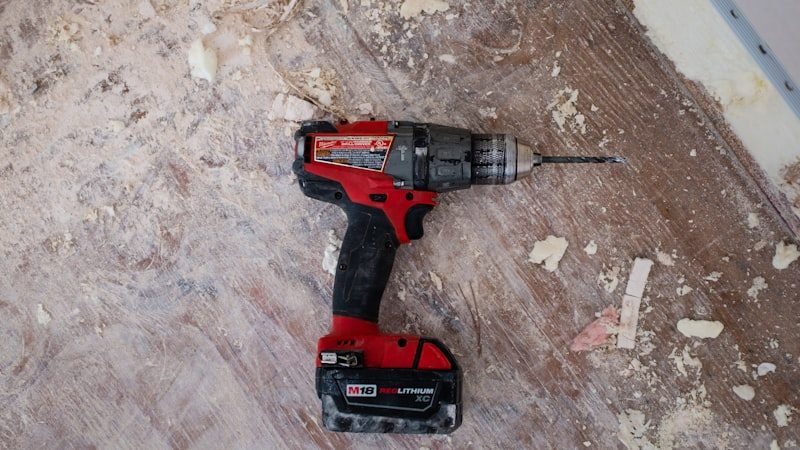
Milwaukee M18: The professional tradespeople’s choice. The widest tool selection of any platform — over 200 tools including specialized trade tools (pipe threaders, cable cutters, bandsaw) that no other platform offers. M18 FUEL tools (brushless motor variant) deliver corded-class performance in most applications. Most expensive batteries ($80-150 each for 5.0Ah+). Not ideal for casual homeowners due to cost.
DeWalt 20V MAX / FLEXVOLT: Strong in construction trades. FLEXVOLT batteries (60V when used in FLEXVOLT tools, 20V when used in standard tools) bridge the gap between standard cordless and corded tool performance for concrete work, table saws, and circular saws. Excellent contractor and remodeling coverage. Broad retail availability. Some tools in the 20V line are lower quality than Milwaukee equivalents at the same price point.
Makita 18V LXT: Preferred in automotive and finishing trades. The largest 18V selection after Milwaukee, excellent build quality, and competitive performance. Strong in Japan and growing in the US. Battery pricing is reasonable; the tools skew toward craftsmen (woodworking, trim work) more than rough construction.
Ryobi ONE+: The best DIY homeowner platform. Lower performance than professional brands but far lower cost — frequently on sale, huge tool selection for the price. If your project list is DIY home repair, weekend woodworking, and occasional outdoor projects, Ryobi delivers good enough performance at dramatically lower total investment.
EGO Power+: Dominant in outdoor power equipment. If you’re primarily buying into outdoor tools (mower, blower, trimmer, chainsaw), EGO’s 56V platform delivers performance that matches or exceeds gas in most residential applications, with far lower maintenance and operating cost. Their battery cells are best-in-class for outdoor equipment.
Battery Voltage: What It Actually Means
Higher voltage generally means higher potential power and torque, but the relationship isn’t linear and depends heavily on ampere-hours (Ah) and motor design. A 20V 5.0Ah battery stores more energy and delivers more sustained power than a 20V 2.0Ah battery. Voltage sets the potential; Ah determines the runtime and the ability to maintain peak power under load.
Brushless vs. brushed motors matter more than nominal voltage differences within a platform. Brushless motors are more efficient, run cooler, require no maintenance, and typically deliver 25-35% more runtime per charge. They’re now standard on professional-grade tools. Budget tool lines within professional platforms still ship with brushed motors — check the product description, not just the brand logo.
Marketing inflates voltage numbers: “20V MAX” (DeWalt) is 18V nominal; “20V” is the peak unloaded voltage of a fully charged 5-cell lithium battery. All 18V/20V tools in the industry are running the same cell configuration — the “20V MAX” label is a US marketing convention. Performance differences are in the motor and electronics, not the label.
Building Your First Kit: The Recommended Order
Start with a kit (two-tool or three-tool sets come with 1-2 batteries and a charger) rather than individual tools. This establishes your platform at the best battery-to-cost ratio. Most two-tool kits pair a drill/driver with a circular saw or impact driver — both high-utility choices for a first kit.
The core four tools for home DIY, in order of versatility: 1) Drill/driver (boring holes, driving screws), 2) Impact driver (faster for screws, driving lag bolts, assembly tasks), 3) Circular saw or reciprocating saw (cutting), 4) Random orbit sander (finishing). These cover 90% of home projects. Add a jigsaw, oscillating tool, or brad nailer as specific project needs arise.
Buy extra batteries early. Running out of charge mid-project is the most frustrating cordless experience. Two 4.0Ah or 5.0Ah batteries per high-use tool is a practical target. Buy OEM batteries from the platform manufacturer — third-party batteries vary in quality and can trigger battery protection circuits in some tools, reducing performance.
Cross-Brand Adapters: Are They Worth It?
Battery adapters (letting DeWalt batteries run Milwaukee tools, for example) exist on Amazon from third-party sellers. These are generally not recommended: they void warranties, some trigger voltage/discharge protection systems and reduce tool performance, and they’re not tested to the same safety standards as OEM batteries. The cost savings don’t justify the risk for anything more than very casual use.
If you find yourself needing tools from two different platforms (common for outdoor + indoor split), consider keeping batteries segregated to each use case: Ryobi or EGO for outdoor, Milwaukee or DeWalt for indoor. The battery costs are separate investments but they don’t interfere with each other, and both platforms stay fully functional.